

Like set design in theatre, locations and buildings in film have been given a lot of thought even from the earliest days of cinema, and particularly so in German expressionist films of the 1920s. Exaggerated, distorted sets reflected the psychological states of the characters, like in The Cabinet of Dr. Caligari (1920) which included lots of imposing, jagged structures to give us a sense of unease and madness.
In early Hollywood cinema, physical spaces were mostly functional, but this started to shift in the ‘40s and ‘50s with film noir, particularly as dark alleyways and claustrophobic interiors looked particularly effective in black and white!
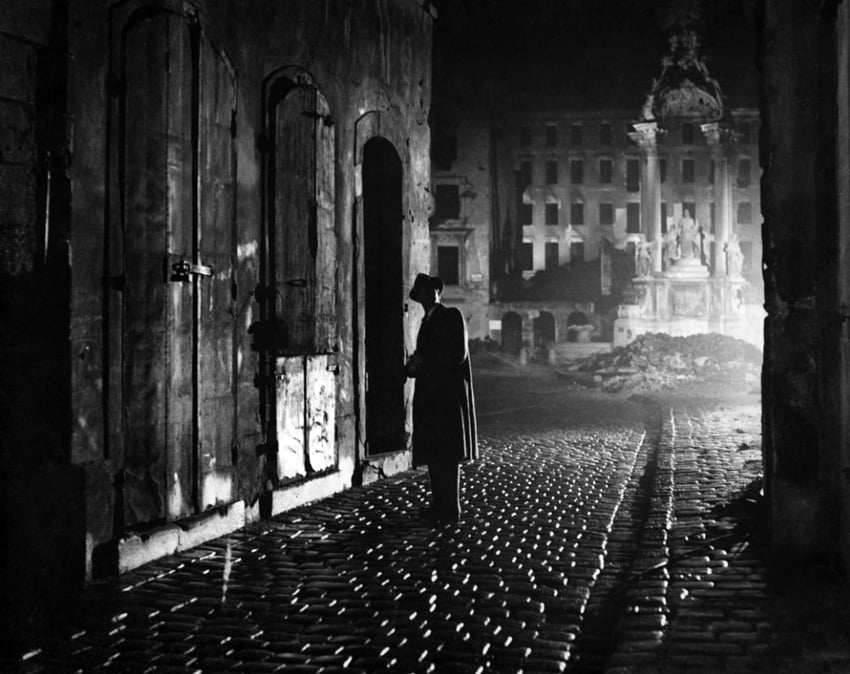
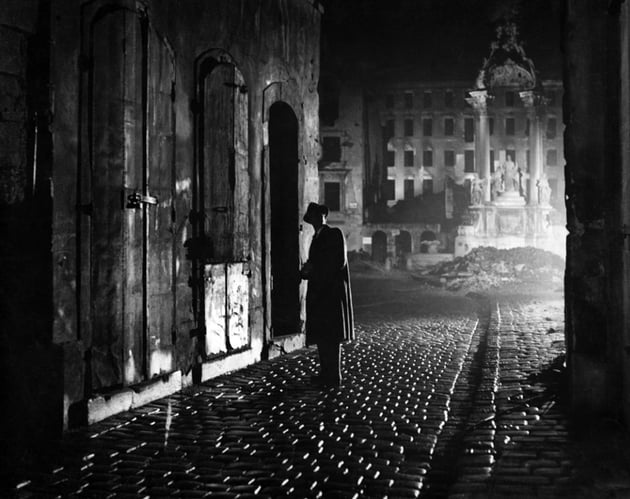
In The Third Man (1949) a post-war Vienna is shown in ruins, its broken buildings also representing the wider fracturing of Europe and the desolation of the characters.
By the mid-20th century, directors like Alfred Hitchcock were starting to use architecture to greater psychological effect. In Psycho (1960), the Bates Motel and the imposingly creepy Gothic mansion behind it were essential for establishing the unnerving tone of the film. Hitchcock’s films often used buildings to mirror what was going on internally with his characters—in Vertigo (1958), for example, the bell tower is a literal and symbolic obstacle for the main character.
Around the same time, directors in Italian Neorealism and French New Wave also started to use urban spaces to reflect social dynamics. In L’Eclisse (1962), the modern and cold-looking buildings of Rome are supposed to show the detachment of the characters. In Alphaville (1965) the futuristic city with sterile, unusual-looking architecture mirrors the oppressive, dystopian world of its inhabitants.
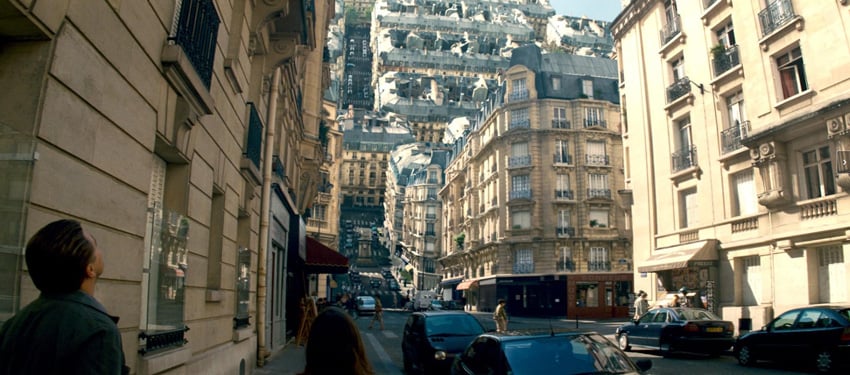
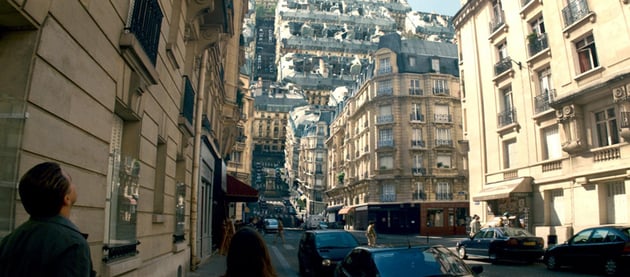
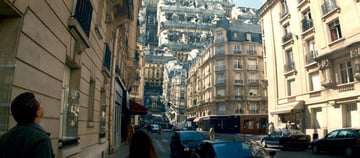
In more modern films, the idea of buildings as characters has shifted a little to take in wider cultural and philosophical ideas. Inception (2010) features entire dreamscapes that are built up and then deconstructed in front of us because the buildings are tied to the subconscious minds of the characters, so there are questions around memory and identity.
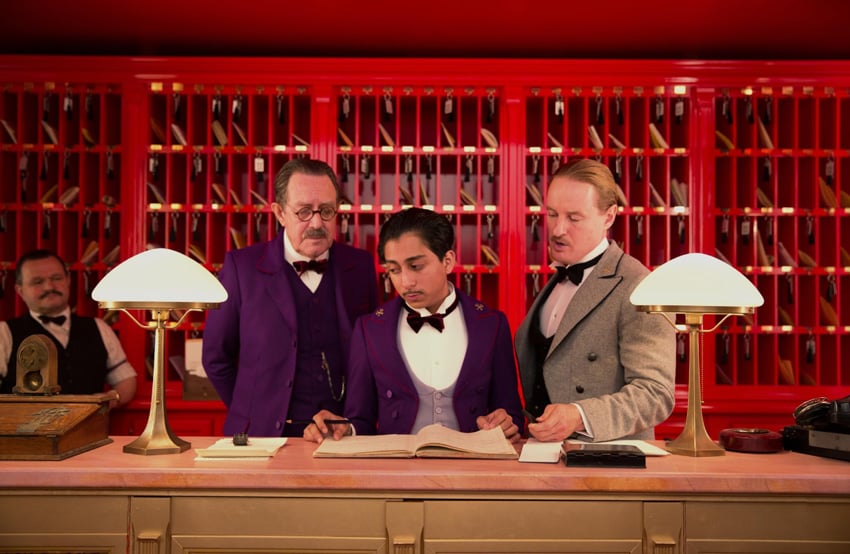
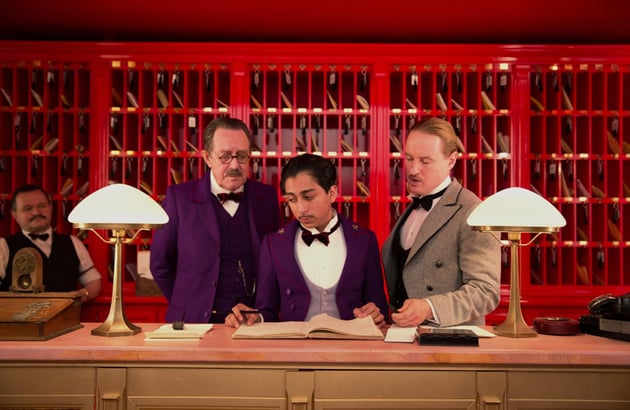
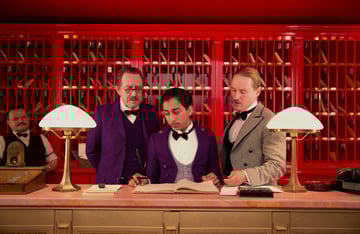
Directors like Wes Anderson give painstaking attention to architectural detail. In The Grand Budapest Hotel (2014), the building is central in the narrative, with its beautifully impressive but decaying interiors linked to the decline of a formerly glamorous era. It’s also intertwined in the emotional and thematic fabric of the film.
Popular films with buildings as characters
1. The Cabinet of Dr. Caligari (1920): Robert Wiene

This film is typical of German expressionism in that it’s characterised by surreal sets that represent inner chaos! The warped buildings with sharp angles are disorienting and suggest a world that’s been altered by madness and instability. As we later find out the story has an unreliable narrator, we can see the space has been reinforcing this idea and showing us nothing is as it seems.
2. Vertigo (1958): Alfred Hitchcock

We’ve already touched on the bell tower in Vertigo and how it’s part of Scottie’s mental journey. It becomes a physical representation of his fear of heights but also symbolises his obsession with the past. It’s a height he can’t conquer, and when Madeleine falls from it, it then represents the trauma that Scottie’s had right through the film. Other buildings are thematic characters (definitely a thing) too, like Judy’s boring apartment in contrast to the glamourous Madeleine's.
3. The Shining (1980): Stanley Kubrick
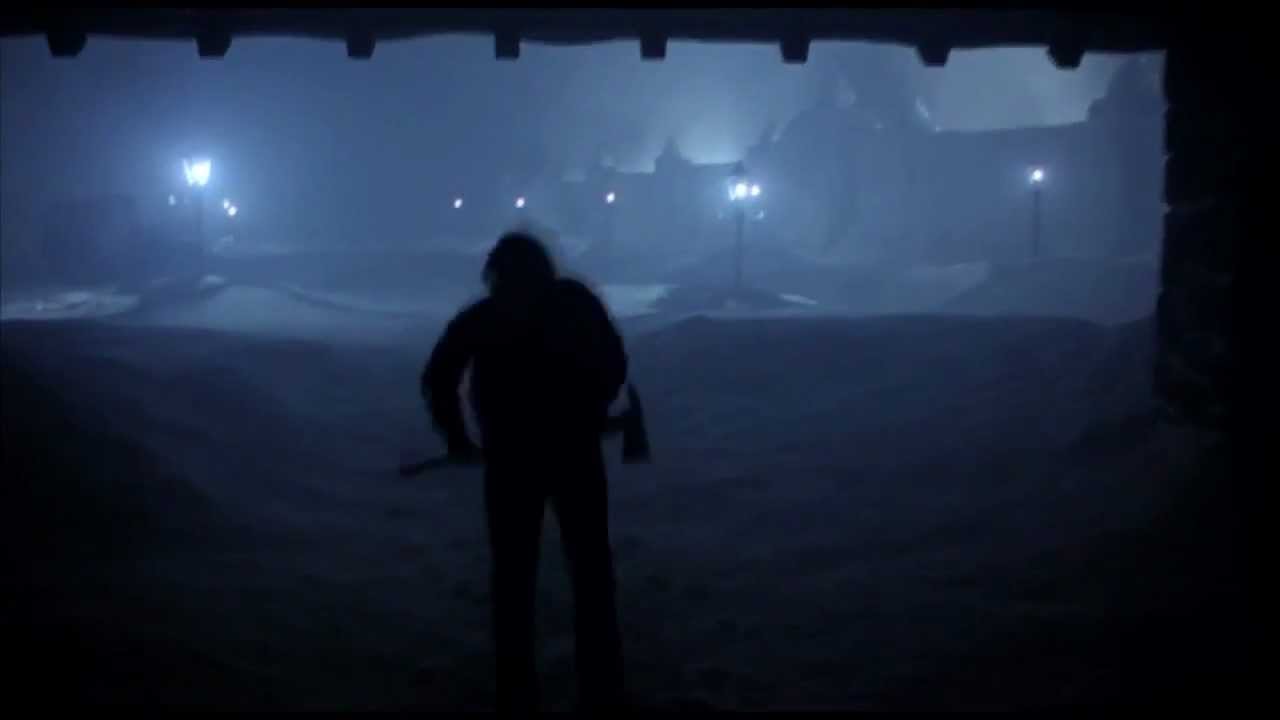
The Shining is probably the most obvious example of buildings as characters because the Overlook Hotel is an evil entity in its own right. It’s at the heart of the film, and the way it’s shown—vast, empty, labyrinth-like—and the fact it’s in the middle of the mountains all kind of hammers home the theme of isolation felt by the characters. It’s not just haunted either—the Gold Room where Jack starts to interact with the ghosts shows us that he’s being manipulated. Part of this malevolence is explained by the hotel’s history and that it stores the horror of past events, and the Overlook wants Jack to become the latest of these.
4. The Haunting: Robert Wise (1963) and Jan de Bont (1999)

In both the original film and the 1999 remake of The Haunting, Hill House is a sinister, living thing. The 1963 film focuses more on psychological horror, and it’s a bit ambiguous whether the house is really haunted or the characters are going mad. In the 1999 version, the house being a character in itself is more literal, with the walls moving, faces popping out of various places, and whole rooms shifting so that the building becomes a physical trap.
5. Crimson Peak (2015): Guillermo del Toro

Crimson Peak is another ‘haunted mansion’ type story featuring Allerdale Hall, a crumbling and dilapidated house that demonstrates the ruined fortunes (but also the moral decay) of brother and sister Thomas and Lucille, who live there. The house’s nickname is Crimson Peak because of the red clay that seeps through the walls—the house is ‘bleeding,’ showing it’s supposed to be considered a living entity.
6. Cinema Paradiso (1988): Giuseppe Tornatore

A refreshing change from evil buildings that want to kill the inhabitants… Cinema Paradiso is the cinema at the heart of a community. For Salvadore, the cinema is central to his childhood, so when he returns to the village as an adult to find it in a state of dilapidation, he’s forced to confront his past and face the loss of that sense of community the cinema fostered. The cinema is demolished, which although tragic, also offers some closure to Salvadore and enables him to move on with his life.
7. Panic Room (2002): David Fincher

A panic room is a place you can go in your house to wait it out safely in case of a break-in or attack. In the film Panic Room, the room itself is integral to the plot, so it becomes a character, at first as a symbol of safety but then a prison when the main characters become trapped in it. As the burglars try to get in, the panic room ends up driving the film’s conflict: one set of characters who want out, and another set who want in! The tech in the room adds another layer to its character too, showing the ideal of safety in contemporary tech-led society, but then critiquing the illusion of security in a world that’s getting more dangerous.
More about buildings as characters in film
Buildings as political spaces
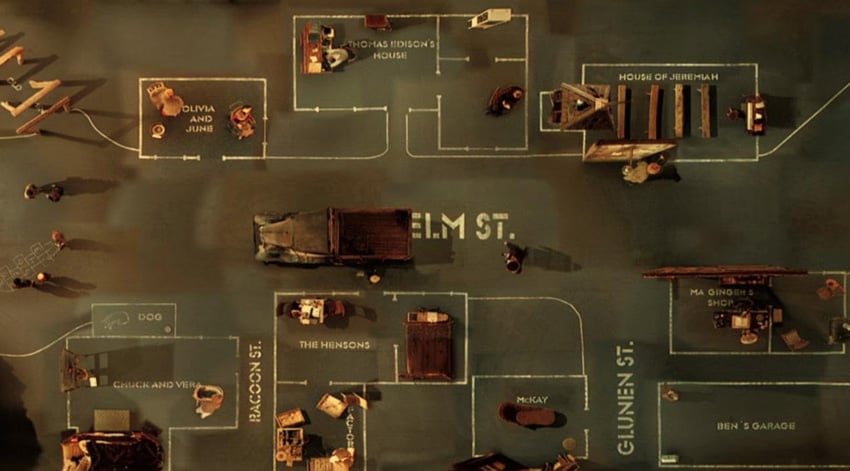

We’ve seen a lot of haunted house examples when it comes to buildings as characters in film, but they can be more than just supernatural beings—they can also be political or ideological. Institutional buildings like schools or hospitals, for example, can look at issues of authority and power, or oppression even. In Dogville (2003), the set is a chalk outline instead of a physical building (or buildings), but it still functions as a symbolic town where various power structures are playing out, so even if the ‘buildings’ are abstract or minimalist, they can still serve as characters.
Gendered spaces
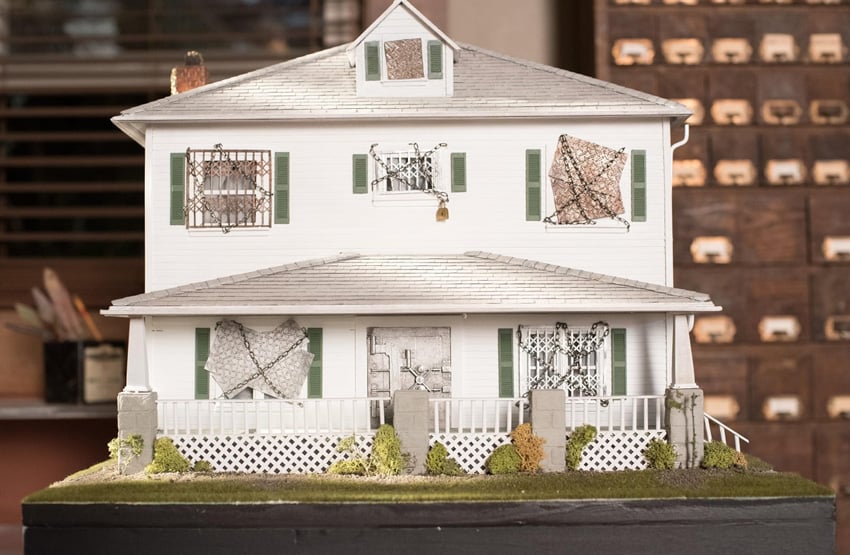

In some films, the way characters are in a space can be shaped by gendered power dynamics and reflect things like expectations of women by society. In Hereditary (2018)—which is, by the way, genuinely terrifying—the house is a comment on the things women inherit and pass on. It works in a literal way—a maternal curse(!)—and metaphorically in the sense of the domestic burdens placed on women.
Futuristic and post-apocalyptic


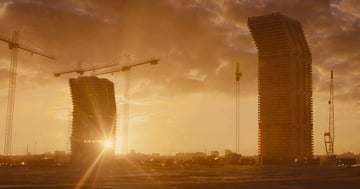
These types of buildings are often about anxiety over technical progress or the destruction of the natural world, but High Rise (2015) is a great example of a building that actually embodies a social hierarchy, with the floors representing different classes and falling into chaos as society unravels.
Dynamic architecture
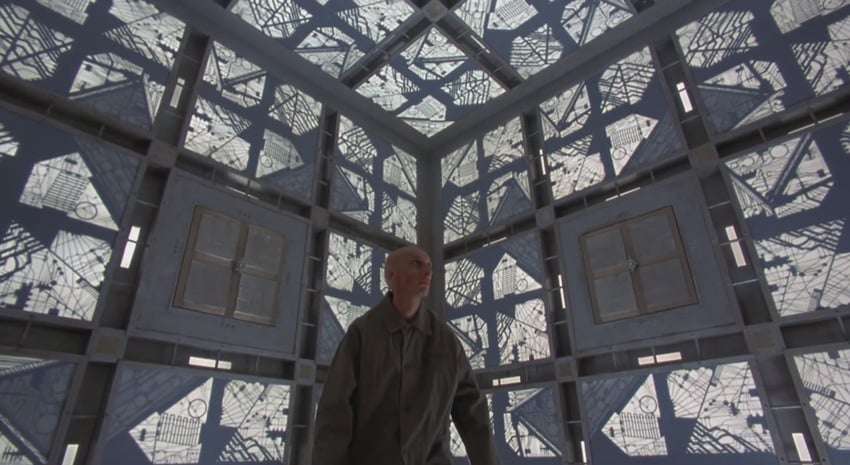

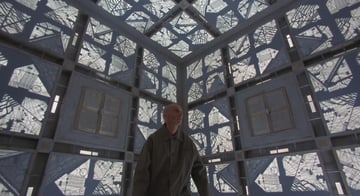
Sometimes architecture can change and respond to the characters’ feelings. Inception, which was an example earlier, is one of those, but there’s also Cube (1997), where the whole story is the characters trying to escape from a series of deadly puzzle rooms.
Buildings as characters in animation
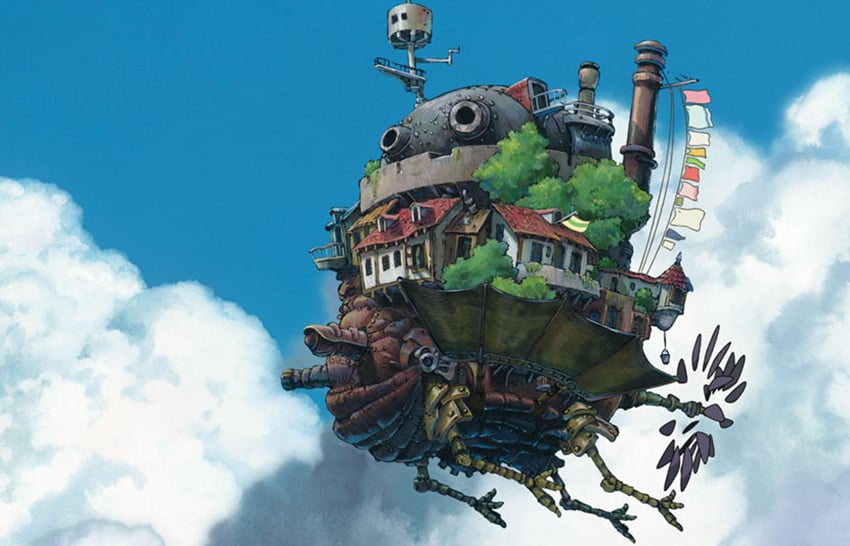
We’ve only really touched on live action films, but animated films use buildings as characters too. Studio Ghibli’s Howl’s Moving Castle (2004) has a building that’s literally alive, changes shape, and reflects the personality of Howl—it’s a direct extension of him! In Up (2009), the house is a metaphor for Carl’s journey and his memories of his late wife that are inside.
Conclusion
The use of buildings as characters in cinema shows that it’s not just people that can play a powerful role in telling the story. From expressionist sets in the 1920s to the more modern dreamscapes of science fiction, filmmakers have always used physical spaces to mirror emotions, represent themes, and drive narratives forward.
If you’d like to find out more about buildings as characters in film, or just about buildings in film in a wider sense, then check out these interesting articles:
- Architecture in film: When buildings play the leading role
- Buildings in film
- 3 films where architecture informs the plot—and characters' psyches
- Buildings in film
- Architecture as the lead character
More free film theory articles


 Why contemporary filmmakers are choosing black and white


 What is mise-en-scène? Visual storytelling in cinema


 What are experimental films?


 What is an anthology film? Let’s look at some examples
About this page
This page was written by Marie Gardiner. Marie is a writer, author, and photographer. It was edited by Andrew Blackman. Andrew is a freelance writer and editor, and is a copy editor for Envato Tuts+.
 By
By






