

Introduction
Ever wonder why one project begs for a $20,000 prime lenses, while another gets by with a $5,000 piece?
In this guide, we’ll translate cine‑lens jargon into plain English. We'll also explore:
- What is a cine lens and the differences between a cine lens vs a photo lens
- What is a prime lens and the difference between primes and zooms
- The creative aspects of lenses
- How to evoke feeling through the glass
By the end, we hope you get the confidence to pick the perfect set for your filmmaking project.
About cine lenses and me
Hi! I'm Michael Lincoln, and I'm a cinematographer.
Cine lenses are built for motion—both in terms of smooth focus pulling and how the image emotionally plays on screen.
I love lenses. My whole career has been around lenses, and I'm I'm very excited to get to share some of my knowledge with you today.
What is a lens?
Your eyes are the original lenses. Lenses are tools that collect light the same way that our eyes do, but instead of projecting into the retinas, they do so onto a digital sensor or a film plane.
This means we get to create and share a perspective. We make films for other humans, and every choice we make has an emotional impact.
At rest, the human eye behaves like a 20mm wide-angle lens. When you focus on something, the eyes tighten closer to 43mm.


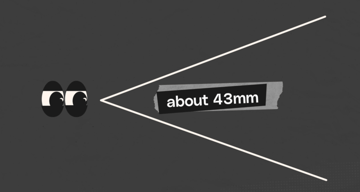
Relaxed vision feels expansive and safe, tunnel vision feels urgent. Cine lenses do the very same trick for your audience, only on-demand.
Lenses are emotional
Another incredible thing about the human eye is that it has auto exposure. Our irises expand and contract depending on how much light is needed. That also happens when we see something that we love.
That's one reason a shallow-focus close-up can feel intimate or electric. The goal of lens choice isn’t just technical fitness, it’s to recreate those pupil-popping moments for someone else.
Anatomy of a lens
Focal length
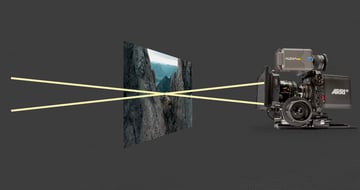
The focal length is the distance from the optical centre of the lens and the point where the light converges to form an image on the camera's sensor plane or film plane.
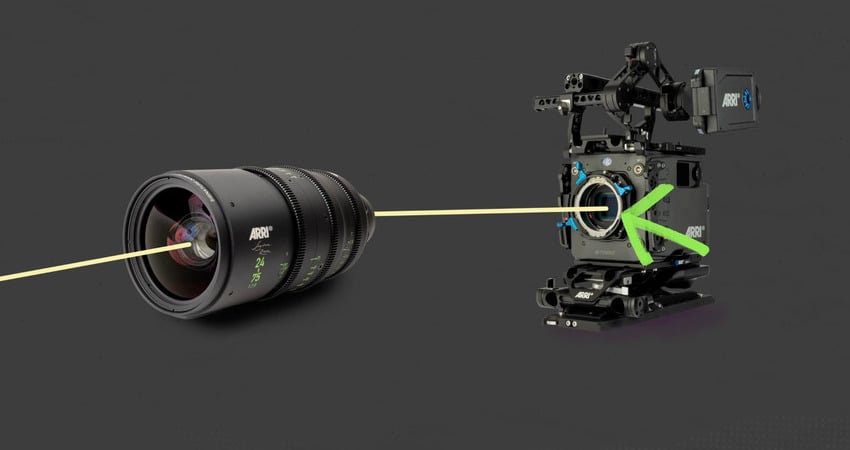
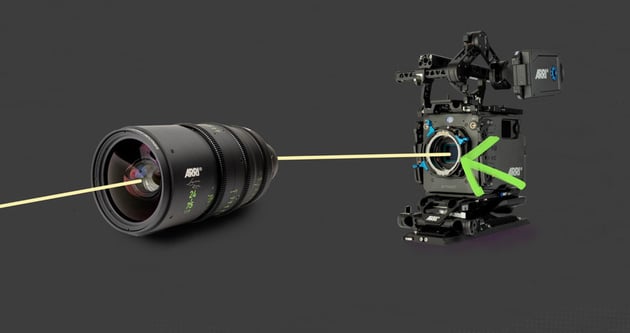

It mainly affects the field of view and the depth of field.
Field of view
The field of view is how much of the world you can see through your lens. For example, an 18mm shows the whole room, while 85mm shows much a tighter frame (like a portrait).


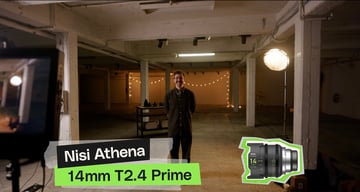
18mm field of view


85mm field of view
Aperture or iris
Aperture is the measurement of the opening of the iris in our lens. A wide open lens at T1.9 lets in buckets of light and a more shallow depth of field. A more closed down stop, like T16, results in a greater depth of field and allows less light in.


T.19 aperture


T16 aperture
Depth of field
The depth of field (DoF) refers to how much of an image is in focus. It's a creative choice that helps us invite the viewer to look at a particular part of the image or to take in the whole scene.
Depth of field is affected by:
- Focal length
- Aperture
- Size of the sensor
- Focus distance
Example: An 18mm lens set to T16 and a focus of 6F results in a shot where everything looks sharp. On the other hand, a 50mm lens set to T1.9 and a focus of 6F results in a background where everything is out of focus (a shallow depth of field).


18mm DoF


50mm DoF
Focus distance
This is the distance between the image plane and the subject. The exact point of focus.


As a cinematographer, you really need to understand how it affects your depth of field—your 1st AC definitely will.
Format and sensor size
This refers to the size of the image sensor or film plane that we project our light onto through a lens.
Some of the common sensors that we have are:
- Super 35, the standard.
- Super 16, which is much smaller.
- Full-frame, bigger than Super 35.
- APS-C, present in a lot of mirrorless cameras.


Changing the size of these affects the depth of field, the field of view, and the feeling of the image.
Prime vs zoom lens
Yes, our eyes are incredible. But there are some things that lenses can do that our eyes can't—like zoom!
Zoom lenses
Zoom lenses have a focal range instead of a focal length. The key features of zooms are:
- Variable focal range
- Servo motors enable smooth, repeatable pushes
- Flexibility, replacing an entire prime set in run-and-gun situations
Prime lenses
So, what is a prime lens?
Prime lenses master one focal length with great detail. Main features include:
- Much better, single focal length
- Typically sharper, faster, lighter
- Better close-focus and less breathing
Cine lens vs photo lens
Photography lenses can deliver sharp, aesthetic, and incredible results at a fraction of the price of cine glass.
Some things to take into account include:
- Affordable (or at least less expensive) and widely available
- Focus breathing, whith the frame subtly shifting when pulling focus
- More probability of chromatic aberration
What is a cine lens?
Cine lenses are purpose-built to minimize the photo lenses issues. They're consistent, precise, and more forgiving for ACs.
Still, many creatives intentionally use photography lenses with flaws to add vintage texture or emotional “imperfections.”
How to choose a camera lens
There's no such thing as the perfect lens for every single job.
So, to choose the more suitable lens for your project, ask yourself these questions:
- What do I want this to feel like? Talk to your director and creative team to come up with your own essence before searching for references.
- Does the project have lots of camera movement? For this part, consider how the camera will be mounted and if you'll need to deal with certain gimbal weight, Steadicam limits, or crane reach.
- Are there night scenes? If so, you'll need a lens with fast aperture.
- Are there any specialty requirements of the shoot? This ranges from underwater or macro takes to needing a crash-cam.
- What format am I shooting on? If it's digital, you may want to consider some more vintage lenses to offset the digital feeling of the sensor.
- What size is your sensor? This determines whether you're looking at Super 16/35 or full-frame.
Lens test starts now!
We'll run real lens tests to see how they feel, not just how they spec. From sharpness and bokeh to chromatic aberration and breathing, this is where lens personality shines through.


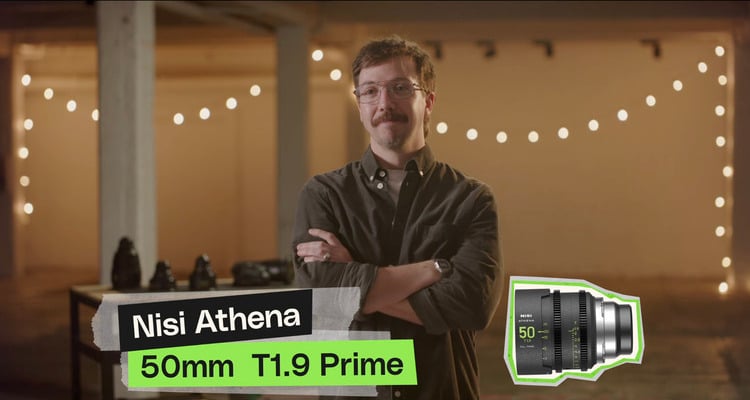
Nisi Athena 50mm T1.9
- Very affordable
- Compact
- Slight chromatic aberration
- Decent close-focus


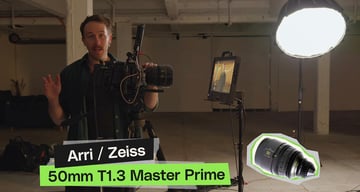
ARRI Master Prime 50mm T.13
- Legendary sharpness
- Some of the cleanest lenses
- Cinematic by design and context
- Twice the cost but emotionally distinct


Overview of the NiSi Athena primes kit
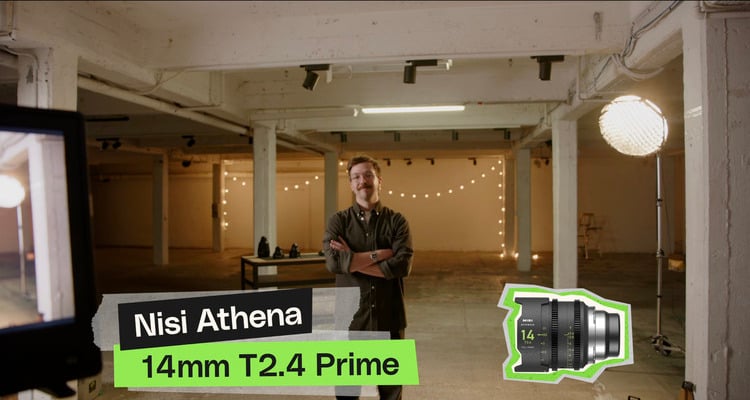
14mm


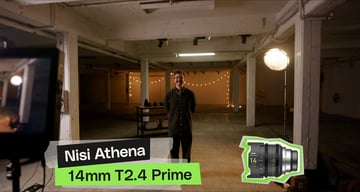
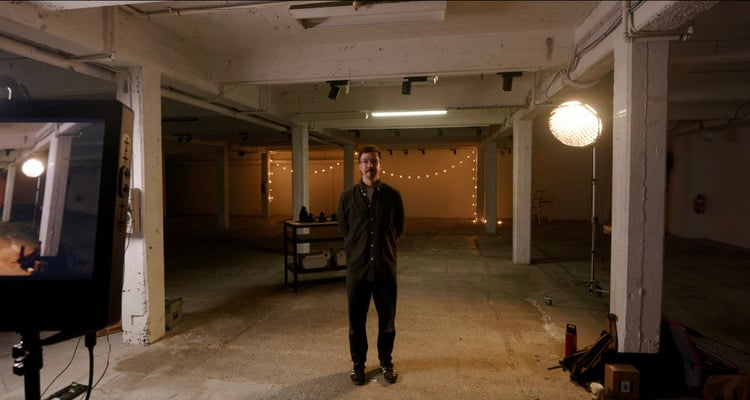
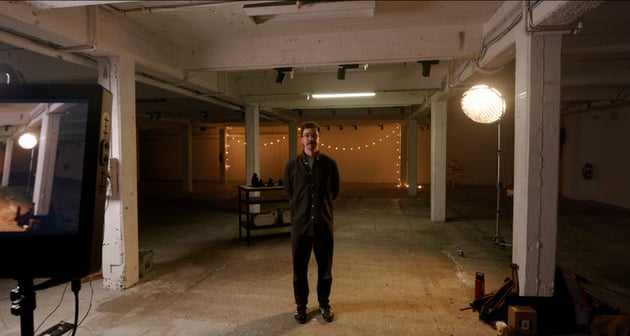
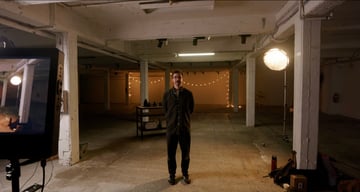
- Amazing for handheld use
- Exaggerated motion
- Ultra-wide
- Deep DoF
25mm


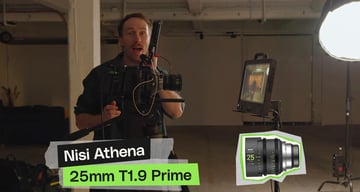
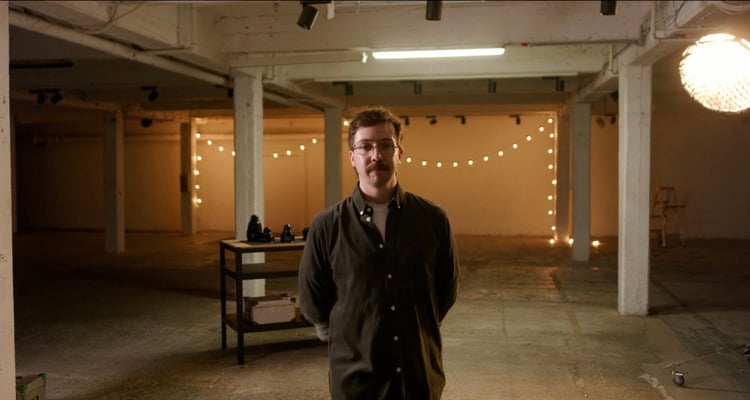
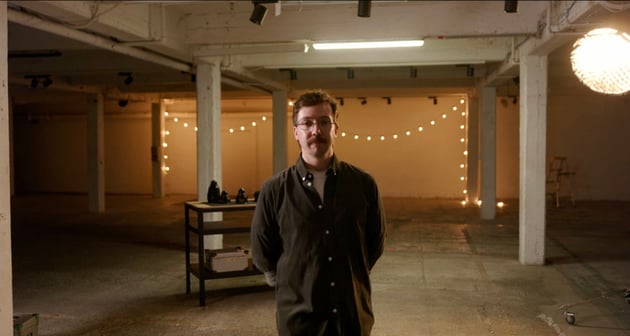

- Wide focal length, yet versatile
- May perceive some flare with light sources
- Great close-focus
35mm



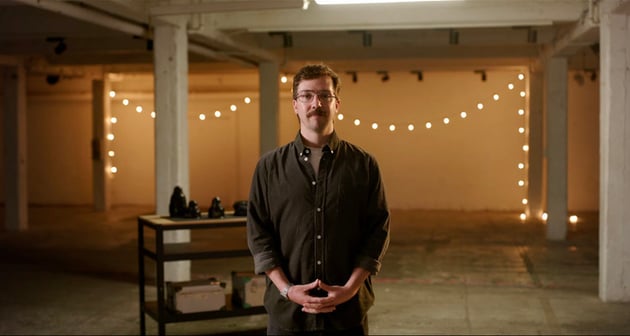

- Staple focal length for faces
- More flattering for people's faces than wider lenses
50mm
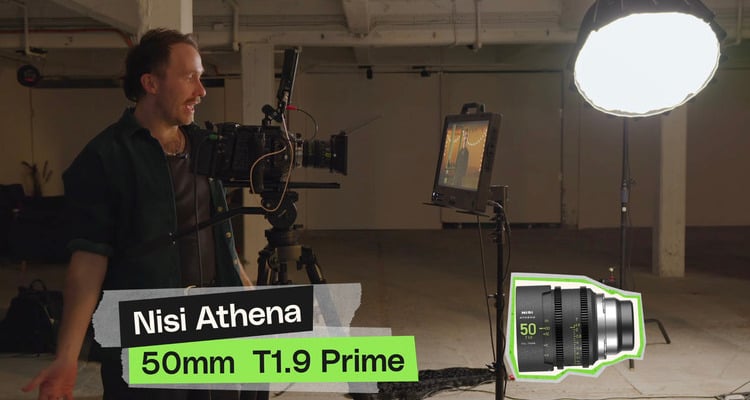





- Classic portrait lens
- Emotionally neutral
- Compresses the space with shallow DoF
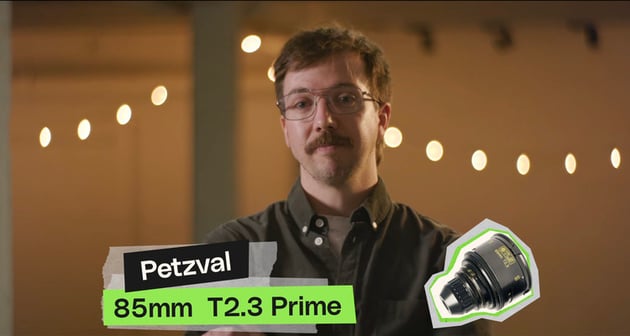
85mm


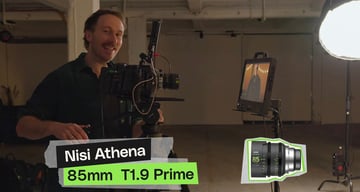



- Intimate and intense
- Even more compressed
- Tricky yet cinematic focus
Getting creative with character lenses
Petzval 85mm Prime


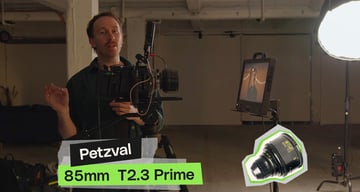



- Wild swirly bokeh
- Elliptical edges
- Dreamlike effect
- Widely used for scenes with anxious or unhinged vibes
Cabrio 19-90mm Zoom
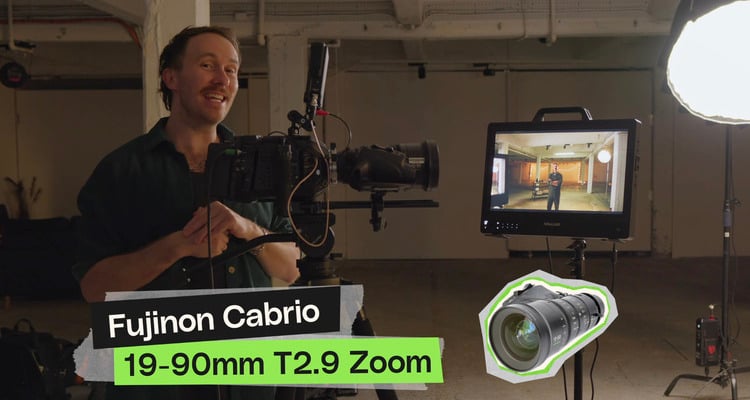
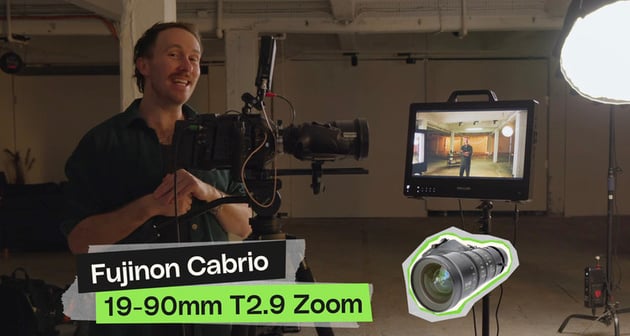


- Starting at super wide 19mm
- Smooth servo zooms
- Surprisingly cinematic results under the right conditions
What about lens flares?
Master Primes keep the contrast even when aimed at a window. Cheaper or vintage lenses bloom, veil, and scatter light—which can be great for flashbacks, dreams, and similar sequences.



Final thoughts
“Learn to look at light with a loving and intelligent eye.” — Seamus McGarvey, Cinematographer
Lens choice is equal parts empathy, engineering, and a sprinkle of movie magic. When you’re ready to test, grab your shortlist and head to your local rental house.
And remember, every graphic, music cue, or LUT you’ll need for the finished film lives on Envato—one subscription, millions of assets.
Want to grow more your cinematic skills? Check out our other tutorials here on Envato Tuts+:


 How to add a film bokeh effect to full videos in Premiere Pro


 How to Use Focal Length and Field-of-View to Compose Photographs


 Choosing a Focal Length for Portrait Photography

 How to create cinematic visual effects with AI-powered video tools


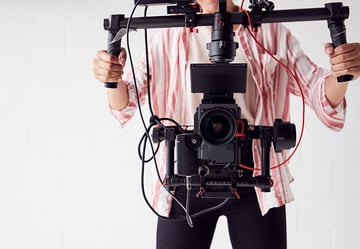 Camera stabilization techniques: From tripods to gimbals and drones

 20 Types of Camera Movements and Shots to Master





