

Buildings are full of interest, whether architecture is your thing or not. We’ve all looked up and admired a grand building or seen an old, abandoned train station and just thought… cool!
Architectural photography can be a
joy to do. While there are distinct differences between doing this
professionally and doing it for fun, but all kinds of architectural photography requires a certain sensitivity. In this tutorial, we'll look at five examples of inspiring architectural photography that demonstrate a special appreciation for buildings, and you'll learn how to take your own expressive architectural photographs.
What You Need
A Wide Lens
Obviously you can photograph buildings with any lens, but a wide lens has certain benefits for architectural photography, such as:
- You can get more in your field of view
- Some unusual and interesting perspectives are possible
- You can shoot closer to your subject, meaning you can avoid people more easily!
My wide angle lens (a Sigma 12-24mm) was my best ever purchase. I love the
unusual angles and perspectives it allows me to capture. Remember, if
you’re using a crop sensor camera (like an APS or micro 4/3 model), you need to take the crop factor into account when calculating the field of view of a lens. In other words, cameras with smaller sensors need lenses with a shorter focal length, like 12mm or 15mm, to get a truly wide angle of view.
If you can’t go wide then try taking several shots and stitching them together into a panorama in dedicated software instead. Remember to get enough shots above, below and to either side of your building to prevent your shot from looking too tightly cropped.
Recommended Reading:
- Mastering Wide Angle Photography: When used properly, wide angle lenses add a perspective that can put a viewer smack dab in the middle of the photograph. A look at the techniques that will create amazing wide angle photographs.
- How to Calculate the Sharpest Aperture for Any Lens: How to calculate the optimal aperture for any lens to maximise the resolved details in an image
The Right Light
The right light is obviously important in any type of photography, but it's especially important for photographing buildings. Consider the time of day you go out to shoot: your building may be highly reflective and turn into a blinding ball of light when the sun shines directly on it; it may look wonderfully sinister when it casts shadows or is backlit.
Ideally, if you can, visit your chosen spot at different times of the day. I know that’s not always possible, so there are a variety of apps such as SunCalc which help you work out where the sun will be in the sky at a given time of day when you put in your location.
If light is really against you and it’s causing your histogram to resemble a big U, then try bracketing shots at different exposure values (say +1, 0 and -1) and then combine them later to balance your exposure.
Recommended Reading:
- Use Manual Mode for Accurate Exposures: Cameras have light meters that are getting better all the time but sometimes your eye knows best.
- What is HDR? How to Create High Dynamic Range Photography: Learn how to overcome the dynamic range limits of digital cameras by combining multiple images of the same scene, each exposed slightly differently.
Do Your Research
What does the history of a building have to do with taking a picture of it? You may be surprised at how learning a little bit about the subject you intend to photograph can inspire the way you choose to photograph it. Research could make you aware of details you’d otherwise have missed.
It may even alert you to its upcoming demolition! Old buildings are often demolished when the cost of refurbishing or upkeep is too much; having a document of that building’s place in history can be a valuable asset to the community in future.
Recommended Reading:
- Archival Photo Restoration: Restoration is more than repairing a damaged image; learn how to document and manage an archive with this course.
Beyond the Square: Inspiration
Look Up, Look Way Up!


I love the lines in this picture. Each building is reflective, and so we get the strong lines of each building reflected back in the other! The glass, which looks uniform but actually isn't completely, causes a pleasing ripple each reflection. The limited colour pallet is pleasing too: nothing but blues and white. This makes an energetic but relaxing image, despite the hard angles and points.
Looking up can get you a completely different perspective on a building or buildings and where talk structures are concerned, you could even end up with a nice gradient from sunny skies down to shadowed building.


Don't Forget the Details![]()
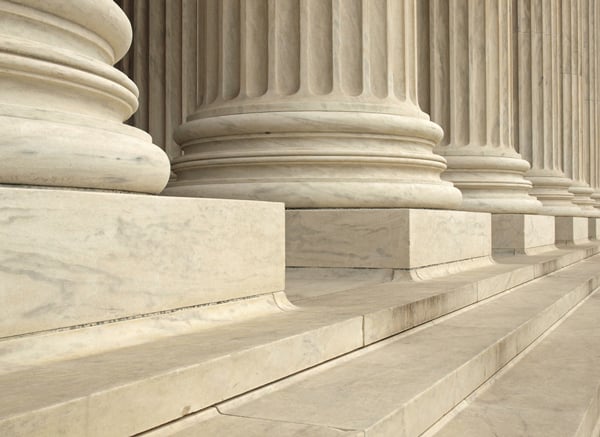

This is a great
example of capturing overlooked details. How often do we take the time to look
down at the ground? The repetition of contrasting horizontal and vertical lines works well
here. We’re pulled (somewhat frustratingly, though not in a bad way) to the edge of the photograph, which causes the eye to move around the whole frame.
Imagine this in a montage with some images of the full building as well as more up-close details. It would give us a much better and broader picture than just the building on its own.


Dare to be Different
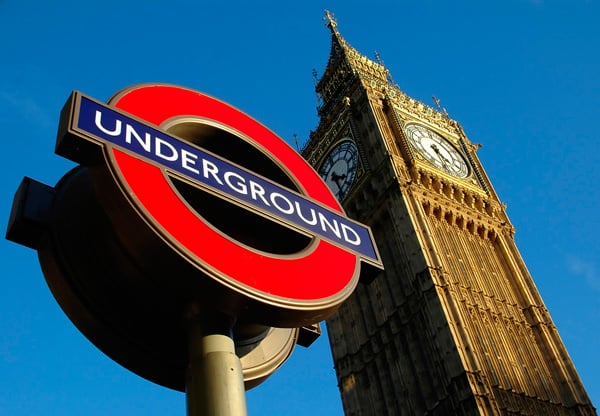
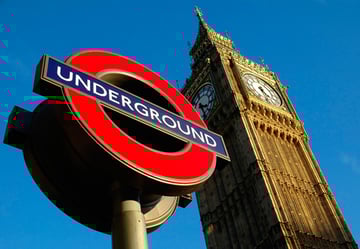
When it comes to getting a unique shot of something which is photographed thousands of times daily, it can be hard. I love this image of iconic Big Ben because even though the architecture is taking a back seat, the foreground Underground sign really gives this interest. If it was just another picture of Big Ben at this angle, I probably wouldn't glance at it twice.
The solid block of blue helps here too; when you've got a lot going on in an image then a busy sky can be distracting; consider editing out distractions like birds or cloud whisps unless they add in some way to your image.


Embrace and Incorporate Motion
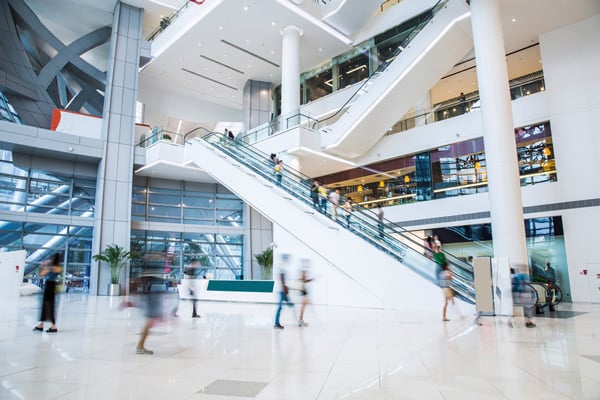

As well as this image having lovely height because of the escalators, it’s got great movement too. The photographer used a longer shutter speed to blur the motion of the people in the frame. This stops the people becoming a distracting and ‘cluttering’ the picture. Instead, what we have is a nice architectural shot which is clean and fast paced. Do this for long enough and it’s possible to rid yourself of the people all together, which can be handy in a busy spot.


Meditating On (and In) Overwhelming Spaces
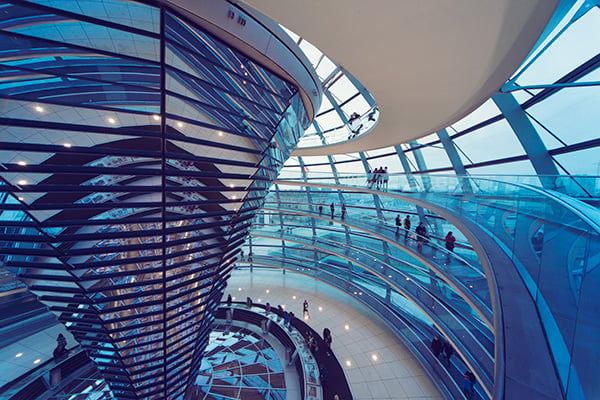
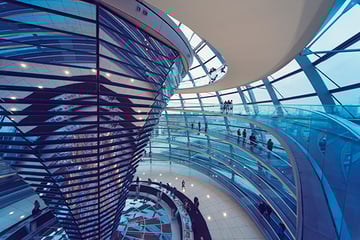
This is a shot I took in Berlin’s Reichstag building a couple of years ago. Although I’m not vain enough to say this is an inspirational shot, the building itself is inspirational. As such, it was actually really hard for me to get a pleasing shot of it. How high should I climb; should I put the central column to one side or in the middle? There were so many lines and shapes going on, as well as a ton of people, it was really a touch choice.
Rather than taking lots of pictures at various stages (I was losing the light), I opted to consider each possibility with my eye first and then dismiss it and move on, or take the picture. Sometimes you need to make decisions and becoming more discerning about when you take a photograph is certainly a skill to develop.


Technique
Black and White, or Colour?
This is mostly something you can think about in post-production rather than while you’re shooting (assuming you’re shooting digitally), but deciding on black and white or colour can often make the difference between a successful shot, or not.
Black and white is often very dramatic, particularly with high contrast. Buildings and their strong presence lend themselves well to these bold images. Consider though, whether using black and white might take away from the ‘intention’ of the building. Is the colour used within the structure of the building may be part of the architect’s design and vision? It’s not something you’d be obliged to consider, but harking back to my point about research, it might change the way you or somebody else, interprets your image.
Recommended Reading:
- Black and White Fun with Macphun's Tonality: Tonality CK is Macphun’s digital black and white editing tool.
- How to Use Colour Balance for Advanced Black and White Conversion in Adobe Lightroom: Adjusting an the white balance of a digital image is an incredibly powerful way to control how Adobe Photoshop Lightroom interprets the colours in your image when you convert to black and white.
Lines, Movement, Symmetry, and Sensual Images
These are things that architecture is rich in, so look for ways to draw your viewer’s eye. From the ground it seems obvious to look up but see if it’s possible to get in or on the building (safely and legally of course) and look down.
Symmetry is a very common architectural tool. As well as adding interest, it probably does a lot to help the building stay upright! If your aim is to capture symmetry then remember it needs to look like a reflection; if you’re off-centre then it won’t look quite right and will lose its impact. It may help you to have the grid displayed on your camera so you can line things up properly.
Also, don't be afraid to experimenting with breaking symmetry. Moving away from the expected composition can add drama, interest, and energy to your frame. Non-standard compositions take time, they're usually not the first thing that comes to mind. Spend some time with your building just looking. What can you see if you consider the object in front of you not as a building, but as a collection of shapes and volumes?
Look up your subject online and see what the most taken shots are, then try to do something different. It sounds like a cliché to say ‘think outside of the box’ but showing people the same angle that’s been done to death online won’t make them gaze in wonder at your picture; try to find something new or different.
Recommended Reading:
- Design Fundamentals for Photographers: In this course you'll learn about four foundational concepts of design: line, shape, color, and visual weight
- Architectural Composition: Space, Pattern, Line, Abstraction: Learn to look closer at the object you’re photographing and its surroundings, to help you compose something that’s visually interesting and, hopefully, branch out a bit from the ‘norm’
Top Tips to Getting Great Photos of Buildings
- Choose your time of day wisely and make the most of the available light to nail your desired look. Use apps like SunCalc to help you pick the best times. After dark can work really well if a building is lit up, so don’t discount the night.
- Research your subject. You may find out something that changes the entire way you go about shooting it. Or you may find out it’s about to be demolished and alter your schedule!
- Think unique. With well photographed buildings, people can become fatigued seeing the same images. Try a new perspective.
- If there are people in the way of your shot, try a long shutter speed with the use of a tripod, to blur the people away.
- Avoid a wide aperture to keep everything nice and sharp
Further Resources
- Look at This! Pictures of the Great Depression by Berenice Abbott and Dorothea Lange: Looking at a photograph and learning to read what we see can help change how we ourselves see the subjects we’re photographing.
- Fresh Eyes Every Day: The Challenges and Rewards of Photographing Close to Home: Photographing close to home has a lot of advantages, and you'll be surprised what you find when you devote some time to it. Finding a new way to see and explore your surroundings can be a profoundly enjoyable, enriching, and fruitful way to practice photography.
- Observation, Visualisation and Composition for Night Photography: Observation, visualisation and composition are an essential part of forging that connection and lie at the heart of good image creation.
- James Kerwin, Urban Explorer: Go Slow and Respect Your Subject: We caught up with urban photographer James Kerwin to find out why urbex is so popular and share his experiences of the subject.
Final Thoughts
Photographing these can be very satisfying but it’s important to remember to stay safe, don’t do anything illegal and also bear in mind that photographing some buildings may give security cause for concern. If in doubt, alert them to your presence and just let them know what you’re doing; it could save confusion and time in the long run, particularly if they think you’re up to no good and call the police.
Capture details as well as grand, sweeping shots. These finer details are the things that many may have failed to grab and could be what makes your shot stand out from the crowd. If they don’t look much on their own you can try creating a photo montage to show off the building as a whole and then those finer touches.
We’d love to see your architecture photographs in the comments below and if you have any questions, we’re here to help.
 By
By






