

Ever wondered what those black bars are on Hollywood films or how to get the same cinematic look for your videos? Follow along to discover everything you need to know about aspect ratios.
Introduction to Aspect Ratios
1. Introduction to Aspect Ratios
The aspect ratio of a film or video is much more than just a technical term—it affects how people view the end product, and you can use it as an important storytelling device. In this free course, we'll look at what an aspect ratio is, explore its history, and help you decide what aspect ratio to use.
2. What Is an Aspect Ratio?
So let's first get clear on what an aspect ratio is:
"Put quite simply, an aspect ratio is the relationship between the width of an image and its height."


The aspect ratio is usually expressed in a ratio of width to height, such as:
- 16:9
- 4:3
- 2.35:1
However, it can also be expressed as a decimal, such as:
- 1.85
- 2.20
- 2.39
3. What Is Letterboxing or Cinematic Black Bars?
So what is letterboxing, or those cinematic black bars that you see at the top and bottom of an image—or sometimes the left and right?
Letterboxing occurs when the aspect ratio of the video is different from the screen it's being viewed on. It's a way of displaying the entire mismatched image on the screen, without cropping any of it out—so the black bars make up the difference.


History of the Aspect Ratio
4. The Early History of the Aspect Ratio
The earliest film aspect ratio was 4:3, simply because of the film stock in use in the early 20th century, which was mostly 35mm film. Using an image height of four perforations on 35mm film led to a 4:3 aspect ratio, which became the industry standard.


5. The Academy Ratio
However, in the 1930s, when silent films gave way to films with audio soundtracks, film-makers needed to make a small adjustment to account for the audio track along the side of the film, so the new standard became the Academy Ratio, which was 1.375:1—very similar to 4:3.
6. Widescreen Madness in the 60s
The Academy Ratio remained the standard until the 1960s, when film-makers began experimenting with various widescreen formats. Human vision, they reasoned, is wider than a 4:3 box, so why not stretch the image to give viewers more information?
7. What Is Cinerama?
An early widescreen format, Cinerama involved shooting through three different cameras at specific angles, and then using three different projectors to project the film onto a huge curved screen, with an aspect ratio of 2.59:1.
It was an outstanding technical feat, but perhaps because of the complexity, it never took off, and only a couple of films used Cinerama, including How the West Was Won (1962).


8. Alfred Hitchcock and VistaVision
A more practical widescreen format was VistaVision, which used traditional film but shot widthwise instead of lengthwise.


Vistavision was eight perforations long instead of the traditional four perforations high, resulting in an aspect ratio of 1.85:1.
9. J.J. Abrams' Anamorphic Lens Flare Obsession
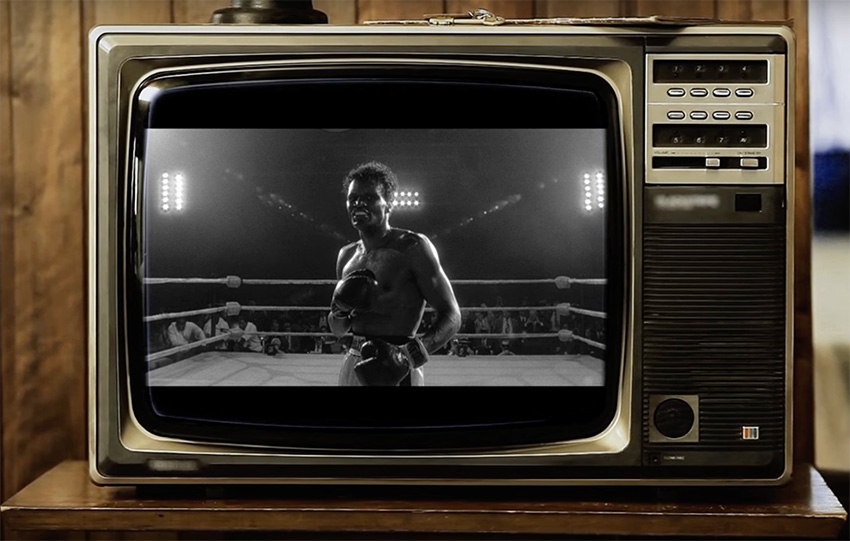
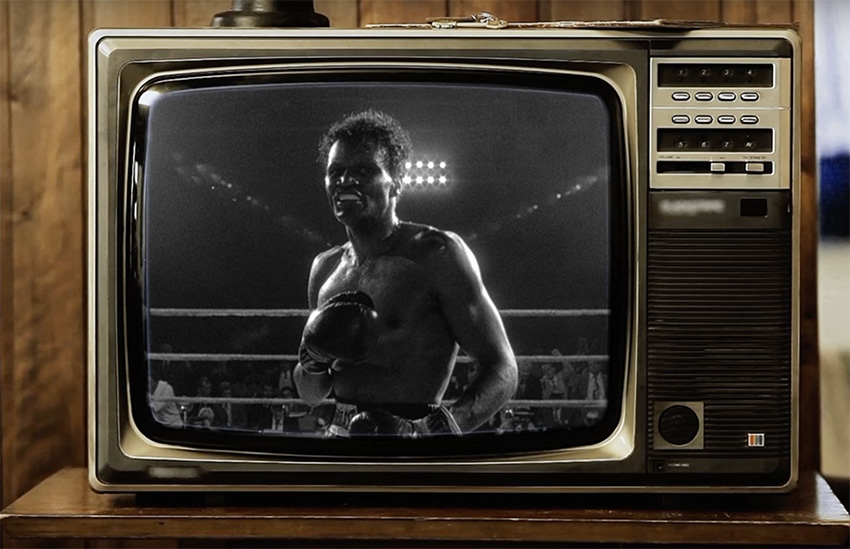
The anamorphic aspect ratio, often known as CinemaScope, is 2.35:1. It's created by shooting using a special lens and squeezing the footage onto traditional film, before "desqueezing" it to produce the widescreen format. You can find lots of examples of it in J.J. Abrams movies.
10. Anamorphic Aspect Ratios and CinemaScope
Flip between the two images below to see how the anamorphic aspect ratio works:


11. Large-Format Film: What Is 65 or 70mm Film Stock?
Some film-makers also chose to shoot using large-format film, such as 65 or 70mm film instead of the traditional 35mm. This led to a whopping 2.20:1 aspect ratio. A famous early example of large-format film is The Sound of Music (1965).


12. Panavision and Large Format With Spherical Lenses
A slight variation on this was Panavision, which also used large-format film but also involved a special lens. Panavision had the same aspect ratio of 2:20:1, and a famous example of it in action is Lawrence of Arabia (1962).


13. Aspect Ratios for TV: What Is 4:3 and 16:9?
As film-makers used widescreen formats to take advantage of the wide cinema screens, however, television was also becoming more popular. And early TV sets had an aspect ratio of 4:3. So movies shot in widescreen either had to be shown on TV with those black bars we talked about earlier or adapted to match a 4:3 aspect ratio.



14. Why Was 16:9 Chosen to Be the Modern Standard?
As I mentioned earlier, 16:9 is the modern standard. Why is that?
Well, it's a compromise between widescreen cinematic aspect ratios and the 4:3 aspect ratio of early TV sets. Modern TV screens often use 16:9 because it's easy to adapt both 4:3 footage and widescreen footage to display without losing too much information or screen real estate.
How to Choose the Right Aspect Ratio
15. The Aspect Ratio as a Storytelling Device
Although the different aspect ratios were born from the technical requirements of film-making equipment through the ages, you can also use aspect ratios creatively in your work.
1930s


1960s


1980s


16. The Grand Budapest Hotel by Wes Anderson
For example, in The Grand Budapest Hotel, director Wes Anderson uses different aspect ratios in different scenes to denote the era in which each scene is set.
17. How to Choose What Aspect Ratio to Use
Although aspect ratio is an individual creative decision for you to make, here are some tips that will help you:
Go Wide for Sweeping Vistas
If you want to capture wide landscapes or large ensemble casts, widescreen is a great choice.


Go Narrow for Mismatched Heights
If you have characters of very different heights, like the dinosaurs and humans in Jurassic Park, then go for a narrower, taller aspect ratio to make sure they can all fit on screen!
Keep It Standard to Keep Viewers Engrossed
For something like a gritty crime drama where you want viewers to feel engrossed in the characters and scenes, a standard aspect ratio of 16:9 is ideal.
Consider Mixing It Up!
Don't be afraid to use different aspect ratios in the same film if there's a good reason for it. It's an interesting creative choice, and mixed aspect ratios are quite common in both documentaries and video games.
Conclusion
18. What I Learned About Aspect Ratios
As we've seen today, the history of the aspect ratio gives a fascinating glimpse into the development of cinema and film-making as a whole. And it's not over yet—aspect ratios continue to evolve to match the technology of the day, as we've seen with the recent popularity of vertical video for use on mobile phones.
I hope this exploration of aspect ratios has been interesting for you and will help you decide which aspect ratio to use for your next project.
Learn More About Video
We've got loads more video and film-making tutorials and courses for you, all free to watch on the Envato Tuts+ YouTube channel. Why not try these next?




Also check out the free video tutorials on Envato Tuts+. Here's a selection to get you started:

 How to Get Steady Motion in Video Shots Hand-held, Without Using Any Equipment


 How to Create Continuity of Feeling in Videos With Colour Grading in DaVinci Resolve


 How to Tell a Story in Film and Video With Colour Grading in DaVinci Resolve

 Create Cinematic Lighting in After Effects


 How to Make a Promotional Video in DaVinci Resolve

 How to Set Up the Blackmagic Pocket Cinema Camera: Quick Start Guide





